Stormy weather…how to handle a crisis

The devastation wreaked by Sandy on the Eastern Seaboard has suspended trading on the NYSE, closed airports and turned one of the most vibrant cities in the world into a ghost town. Watching  footage on last night’s news, it’s been interesting to see how US leaders and local officials have mobilised their resources and crafted their messages to the American people.  A very different response to that of Hurricane Katrina, where the former US President was caught napping. Hard lessons have been learned – it’s very clear that action (rather than vacation) is being taken.

This got me thinking about the best way to deal with a corporate crisis. I admit, unless you are a paramedic or doctor, workplace dramas are not of the same magnitude as Super-storm Sandy. It’s business after all, not brain surgery!  However, get it wrong, and the collateral damage & reputational aftermath can be as devastating as a botched lobotomy.

So how can you handle a crisis?  Here are my top tips:

  • Stuff happens…be ready when it does. No matter how organised you are, there will always be things in business that arrive like distant relatives – unannounced, inconvenient and staying for a while.  Redundancy, clients that won’t pay on time, technological snafus, product launches that bomb.  Although most large corporates have contingency planning built into their strategy, there is always an eventuality that has not been accounted for. The recent banking crisis is a case in point.  Even small businesses and entrepreneurs are not immune to Murphy’s Law. The point is, you need to acknowledge that things go wrong from time to time and be prepared to take remedial action when this occurs.
  • One, two, three…breathe. Headless chickens are not terribly attractive. Neither are ostriches. So when things go wrong, avoid the temptation to race around at breakneck speed trying to fix things. Ever heard of the ‘Law of Diminishing Returns’?  I realise this may seem totally contradictory to the point I’ve just made, but the distinction here is:  you take stock, not a nap! Consideration, not procrastination.  I also don’t have to tell you what part of the ostrich is visible when it’s head is stuck in the sand.
  • Get the right help. Depending on the crisis in question, you may need external advice.  Don’t make the mistake of toughing it out on your own, because you are too proud to ask for help. You wouldn’t go to a car mechanic to get your tooth filled, would you?  Make sure you have access to the best team you can get – especially if the crisis is legal, financial or medical.  If you are a small business, and cost is an issue your local business bureau or citizens advice centre can provide access to appropriate resources. And remember your support team can be a virtual posse or a trusted group of colleagues.
  • Words and deeds.  When dealing with a crisis, make sure that any action you take is followed up with clear communication. Whether it’s your customers or employees who are being affected, it’s vital that you tell it like it is. Don’t fudge the issue, don’t make excuses. To paraphrase the philosopher Don Miguel Ruiz, you must be ‘ impeccable with your word’.  Hard though it might be, that means matching language with action.  Do what you say you will do to make things right. And, as crises are often as unpredictable as the weather, be prepared for things to change rapidly. Adjust your communication accordingly.

Finally, just as the US clean-up will begin once the storm has passed, the real work usually starts when you have to deal with what comes next.  As John F Kennedy once said: ‘When written in Chinese, the word “crisis” is composed of two characters. One represents danger and the other represents opportunity’.

What do you think?  How do you handle a crisis?  Share your top tips on the blog.

The rise of the chameleon…why adaptation matters in organisations

Image: Dreamstime

What do Chameleons, Stick Insects and Squid have in common?  They are all creatures that change colour depending on their surroundings, enemies, temperature or mood. In the natural world this ability is known as signalling, and has evolved as an evolutionary means to communicate or camouflage.

You are probably wondering what bearing this has on the modern business habitat?

Well, it may not be a jungle out there, but to survive – and thrive – corporate leaders and managers need to be comfortable with change.  Adaptability is key.  The financial pages are littered with stories of organisations who were looking the other way when the winds of change blew in.  In 2009, UK retailer Woolworths went bust after 100 years of trading history. 30,000 people lost their jobs. While there are many reasons for the decline, the contributing fail factor was a lack of focus on their core retail strengths (you could buy anything and everything) and an inability to respond fast enough to inclement market conditions. In these credit-crunching times it any wonder that these premises are now occupied by discount retailers such as Poundland – squarely aimed at budget-constrained consumers?

Savvy organisations recognise that change is a constant – and are able to respond to their environment.  Super-savvy organisations actually build this type of reflex into their strategy.  I’m reminded of the latest TV campaign for Amazon, who claim they ‘make the revolutionary, routine’– the premise being that innovating for change is the new normal.  For such businesses, change is not merely something that happens, but something  that the leaders of these organisations actively shape.

Sharks may be the ultimate predator, but their corporate repertoire is somewhat limited. Far better to be a chameleon. Not only can they change their spots in 20 seconds flat, they can focus on two objects at the same time. They also catch prey at about 30 thousandths of a second. Now that’s what I call a reflex! Managerial mimicry, anyone?

What do you think?  Can being a corporate chameleon help you adapt? Comments on the blog, please.

The ‘C’ word…

Organisations are a lot like families.  They have history, they have memory, and they have personality.  And yes, in some organisations- like families – you find the odd, mad relative sequestered in the boardroom!

All of these attributes are what make up the behaviours, attitudes and culture of a company. In short, ‘the way things are done’ – or not done – depending on the organisational culture.  You ignore this at your peril.  Culture isn’t just the preserve of multinational organisations, it impacts the start-up as well as the SME. Like brand, culture is one of those intangible organisational assets – tricky to quantify, but something that will hit your bottom line if you get it wrong.

In the corporate world, many mergers fail, not because the deal is bad, but because insufficient cultural due diligence has been undertaken.  I’m sure you are familiar with post-merger cultural change programmes where the acquiring leadership bring on the bling – extolling the virtue of the shiny, new strategy and how it will magically meld the cultures, distilling the best of both, and so doing transform the business.  And I’m equally sure you have seen those people at the back of the room mentally giving the new leadership a two-fingered salute as they carry on doing what they’ve always done!

Culture can be an enabler to transformative change, or it can be an impermeable barrier.  Does this make cultural change a pipe-dream? Not necessarily. Jack Welch famously transformed GE, by fundamentally shifting the way employees thought and acted.  Although there are critics of this approach – he wasn’t called ‘Neutron Jack’ for nothing – GE’s business transformation succeeded because it was rooted in cultural change.  Stuart Rose, erstwhile CEO of Marks & Spencer is credited with re-energising the business – not simply making it more profitable, but capturing a young, more fashionable customer base.  He refocused the business by recalibrating the culture.

Really great organisational cultures can enhance employee productivity, strengthen talent retention and grow customer revenues.  Toxic cultures by contrast, corrode organisational confidence, haemorrhage talent, and alienate clients.  How so? Well, culture determines organisational priority – in other words, the way things are done will tell you a lot about what is considered important by the people who work for and with you.  Is it any surprise that performance-driven cultures place great emphasis on margin, acquisition and growth, while innovation-loving start-ups prize creativity and quirk?

To my mind, the determining factor in successful cultural change pivots on two fundamental axes. Leadership.  Leadership behaviour.  Do the words of the CEO match his or her deeds?  There are many hackneyed phrases to describe this, but if your leadership isn’t 110% behind the change in ‘everything they do’ it simply won’t happen.  If leadership lack the necessary pair to make tough decisions (and let’s face it, in a merger situation, some people will adapt to the new world order, and some will need to exit the building) then at best, you will have a hybrid culture – not one thing or the other.  Finally, if there are no consequences for non-compliance – in other words, counter-cultural behaviour is tolerated by leadership – don’t expect to make lasting change.

Ghandi once said that ‘a nation’s culture resides in the hearts and soul of its people.’ This holds just as true for organisations.  Real organisational change is based on cultural shifts that create corporate soul. Change the culture, transform the company.

So, what do you think?  Does culture matter? Comments on the blog please.

Change is a team sport…

Sportsmen and women from 204 nations will compete in the London 2012 games. For many of these athletes, the 2012 games represent the ultimate testing ground. Pitting themselves against the best of the best – and (in many cases) themselves –  they will run, jump, wrestle, swim and swat their way to glory in over 302 medal events.

Watching Friday night’s Olympic opening ceremony, I found myself really moved by the collective esprit d’corps as the first of the 10,490 athletes entered the main stadium, cheered on by 80,000 local well-wishers, and a global audience of billions.  It felt good to be part of the celebration.

Of course, the 30th Olympiad is the culmination of years of preparation and the hard work of many, many people. Which got me thinking…the whole event has parallels with business change and transformation.  Specifically, moving from a current state (planning to host a global event in a deprived borough in London) to a desired state of play (delivering the games successfully). And like business change – whether it’s to do with culture, process or strategy – planning, sacrifice and sweat are part of the deal!

While you need strong leaders to champion and drive transformational change, the reality is that it doesn’t happen without the team. Even solo athletes have a cadre of coaches, nutritionists, psychologists and friends who spur them on to realise great things – achieving gold at the London Olympics or exceeding their personal best!  To my mind, this is where many organisations falter.  Leaders get so focused on the future state, that they forget about the present one. Change doesn’t happen just because the CEO says so.  Business transformation is a journey, and clearly you need to prepare well. However,truly successful transformation comes for those who recognise that their people are pivotal in making it happen. Involving your home team in the process can make the difference between being a corporate catastrophe or a true contender.

What do you think?  Do leaders, or employees make change happen?  Comments on the blog, pls.

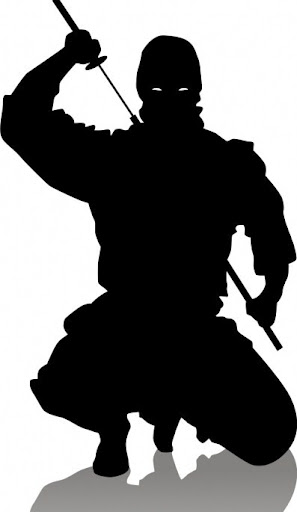
Why change management is like being a Ninja…

James Bond: ‘Do you have commandos?’

Tiger Tanaka: ‘I have much, much better. Ninja’s. Top-secret, Bond-san. This is my ninja training school’.

– You Only Live Twice (1967)


As a consultant who helps organisations in times of transition, I’m minded to see what I do as an art, rather than a science. In simple terms, change management is about moving organisations and individuals from a current state to a desired future state, the implication being that the future state is somehow an improvement.

Yet we know that 70 per cent of transformation programmes fail.  This is the science bit! The statistic is based on research done by John P. Kotter, change management guru. It underscores the difficulty of catalysing change in large, complex organisations. From experience I can tell you that major change programmes demand a combo of pragmatic perseverance and managerial martial arts. Which is where the Ninja enter the room!

Ninja (or shinobi) were covert agents, stealth soldiers or mercenaries in feudal Japan. They specialised in unorthodox warfare.  The functions of the ninja included espionage, sabotage, infiltration, assassination and open combat in certain situations. Sound like any organisations you know? Yep. Me too!

Despite the negative perception of ninja’s as spies, deceivers, saboteurs and arsonists, there are several positive aspects to their methods and training:

  • They were resourceful, versatile and unorthodox.  Ninja made use of a variety of different objects tools and weapons in numerous interesting ways to help complete their missions and achieve their goals.
  • They were clever and prescient, honing their ability to predict outcomes and out-think enemies.
  • They created ‘Ninjutsu’ – the art of ‘stealth and perseverance’ – in practice, a range of tactics and strategies for problem solving on both a physical and mental level.

As a change agent, I’m very often expected to draw on similar resources. I have to be resourceful – using what shows up at any given moment, whether that’s in a management meeting or my in-box! I have to demonstrate mental agility – change creates ambiguity in organisations, and not everyone is good at dealing with it. It’s vital to be able to suss out possible outcomes and unintended consequences so you can head them off before they become a burning issue. It’s what my clients pay me for. And yes, sometimes I do have to practice my art with subtlety – it’s what I call ‘sneaky change management’.